Sushi has become one of the most familiar Japanese foods in Australia, sold everywhere from food courts and train stations to counter restaurants where a chef serves one piece at a time. Yet the word covers many different styles, and the etiquette can feel mysterious the first time you sit at a sushi counter. This guide explains the main types of sushi and sashimi, the terms you'll see on menus, how to eat sushi well and the food safety basics.
This guide is general information written in our own words, based on the official sources listed at the end. Recipes and practices vary between restaurants, and food safety and health advice depends on your circumstances, so check the official source and follow your doctor's advice if you have an allergy, coeliac disease, are pregnant or have a weakened immune system. We don't review or recommend particular restaurants.
What sushi is
The NSW Food Authority describes sushi as cold, cooked rice acidified with vinegar, shaped into bite-sized pieces and topped with raw or cooked fish, or formed into rolls with fish, egg, meat or vegetables and wrapped in seaweed (nori). The defining element is the seasoned rice, called shari. The topping is called neta.
That means sushi doesn't have to contain raw fish at all. Rolls filled with cooked chicken, tuna mayonnaise, avocado or cucumber, egg omelette (tamago) and inari are all sushi. This matters if you're avoiding raw fish, for example during pregnancy.
Sashimi
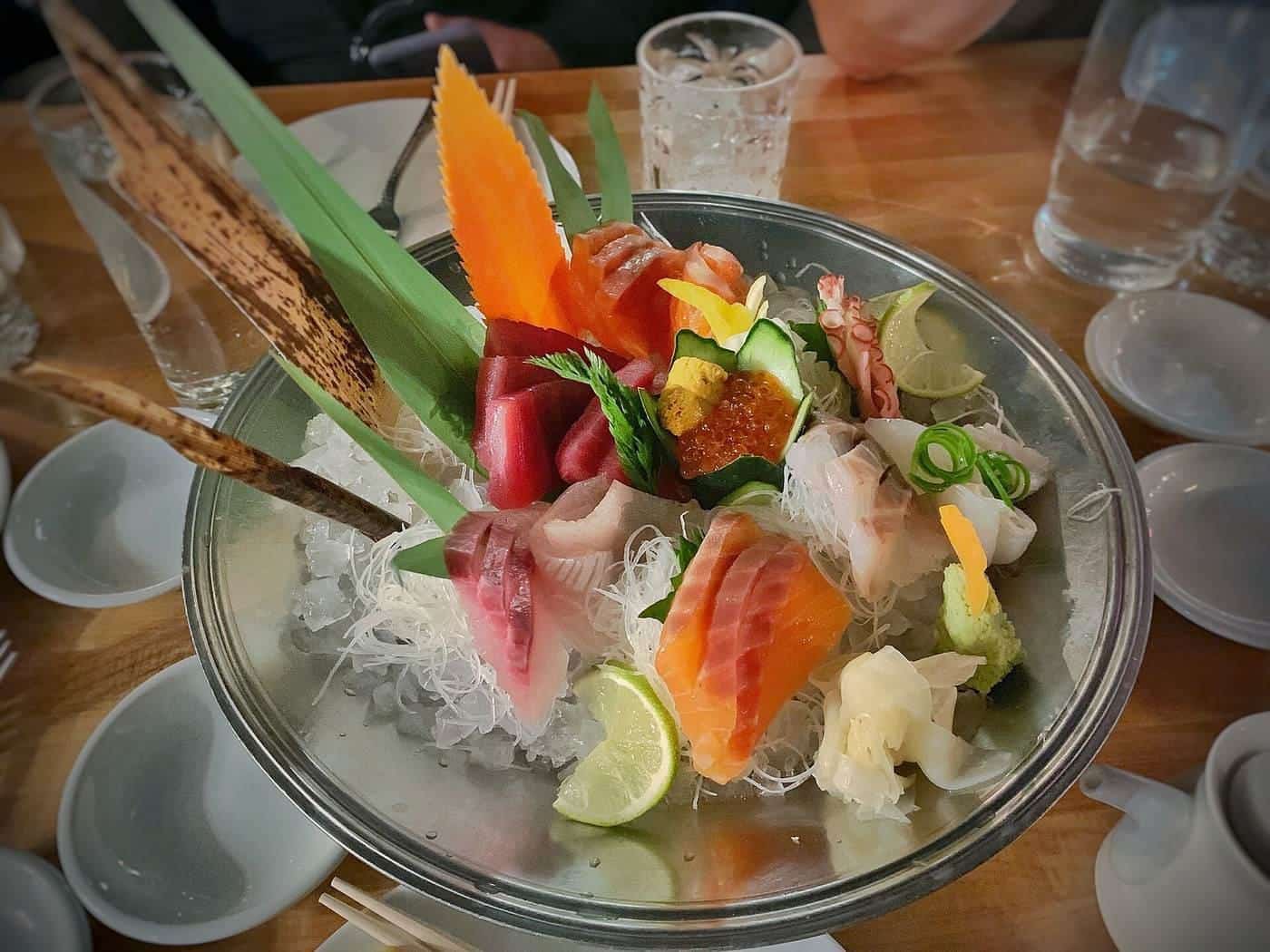
Sashimi is sliced raw fish or seafood served on its own, without rice. It's often served with grated daikon radish, shiso leaves, wasabi and soy sauce. Because it's eaten raw, the quality and handling of the fish are especially important.
The main types of sushi
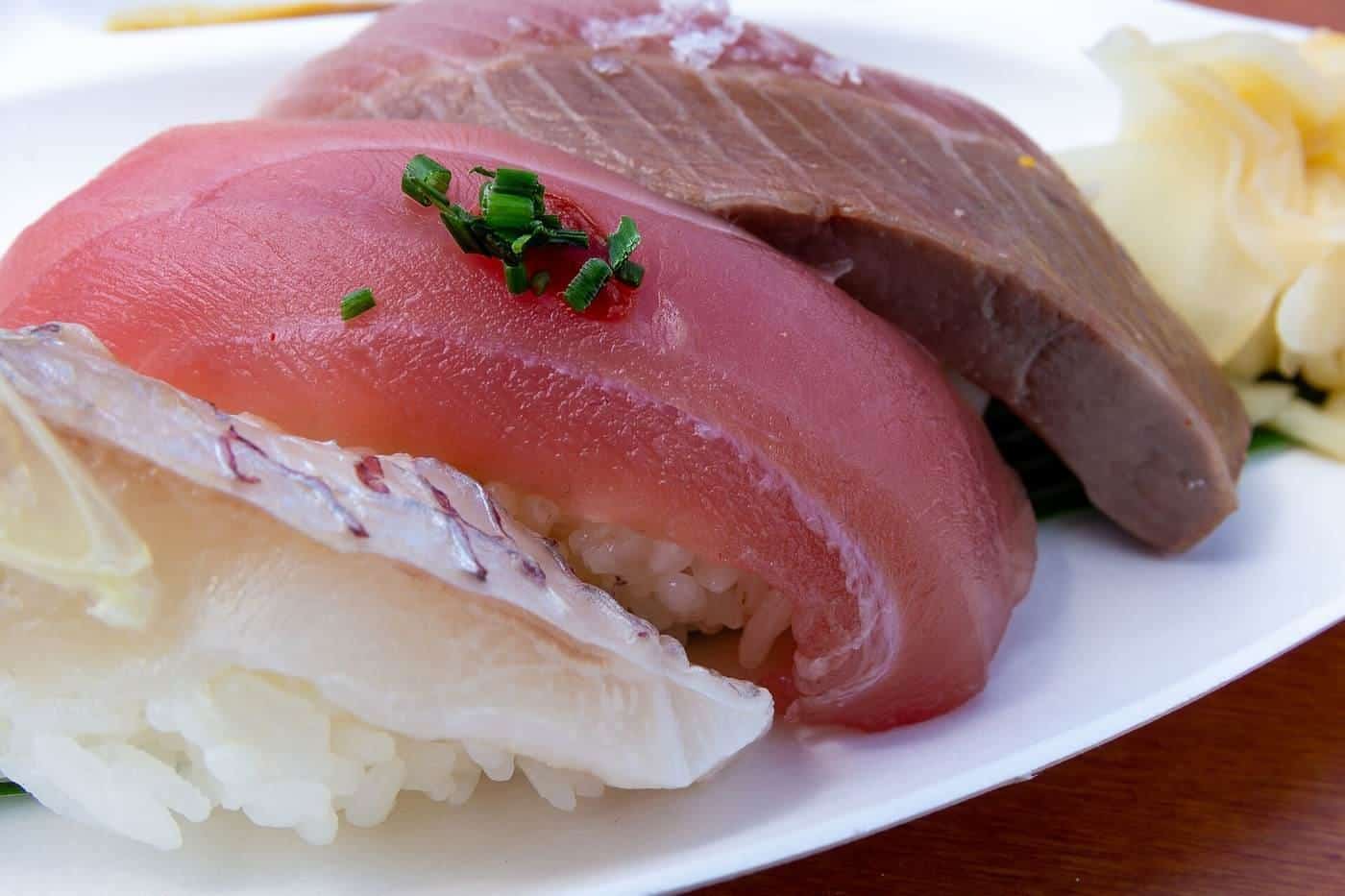
Nigiri (nigirizushi). A small, hand-pressed mound of rice topped with a slice of fish or another topping. At a sushi counter, the chef often adds a little wasabi between the fish and the rice.
Maki (makizushi). Rolled sushi. Rice and fillings are wrapped in a sheet of nori, rolled with a bamboo mat and cut into pieces. Thin rolls with a single filling are often called hosomaki; thicker rolls with several fillings are futomaki.
Uramaki. An inside-out roll, with rice on the outside and nori inside, often coated in sesame seeds or fish roe. Many of the rolls sold in Australian sushi shops are of this style.
Temaki. A hand roll: a cone of nori filled with rice and fillings, eaten with your hands soon after it's made, before the nori softens.
Inari (inarizushi). Sushi rice packed into a pouch of seasoned, fried tofu. It usually contains no fish.
Gunkan. "Battleship" sushi: a mound of rice wrapped in a band of nori, with a loose topping such as fish roe piled on top.
Chirashi. A bowl of sushi rice with toppings scattered over it.
Common toppings
Typical nigiri and sashimi toppings include tuna (maguro), salmon (sake or shake), yellowtail (hamachi), prawn (ebi), squid (ika), octopus (tako), eel (unagi or anago) and egg omelette (tamago). Menus in Australia often use the English name, but our menu terms guide and the menu decoder on our home page explain the Japanese words.
How to eat sushi
JNTO's sushi guide sets out a few simple rules that make sushi more enjoyable:
- Chopsticks or hands are both fine. JNTO notes that hands are perfectly acceptable, especially at higher-end restaurants.
- Dip the topping, not the rice. Dipping the rice soaks up too much soy sauce, overwhelms the flavour and can make the piece fall apart.
- Ginger is a palate cleanser. If pickled ginger (gari) is served, eat it between pieces rather than putting it on top of the sushi.
- Don't mix wasabi into the soy sauce. JNTO's manners guide notes this is frowned on at nicer sushi restaurants, though more casual places are relaxed about it.
- Eat each piece promptly, in one bite if you can. JNTO's sushi master class article describes picking up nigiri soon after the chef places it in front of you.
General chopstick etiquette applies too: never pass food from chopstick to chopstick, and never stand your chopsticks upright in a bowl. See our etiquette guide.
At the sushi counter
At a counter restaurant, the chef makes each piece and places it in front of you. JNTO describes this as a two-way relationship: the chef adjusts the pace and even the amount of rice for each diner. You're welcome to tell the chef about anything you can't or would prefer not to eat. Many counters offer omakase, meaning you leave the selection to the chef.
Conveyor-belt sushi
At conveyor-belt (kaiten) sushi restaurants, plates pass by on a belt and you take what you like. JNTO notes that you may take plates freely, but should never put a plate back. If there's a chef at the counter, you can usually order directly. Plates are often priced by colour or pattern, so check the price guide before you start.
Sushi and food safety
Sushi is one of the foods food safety regulators pay close attention to. The NSW Food Authority lists the concerns: many businesses display sushi at room temperature to keep its texture, it contains perishable ingredients and it involves a lot of handling. In NSW, retail sushi can only be displayed out of refrigeration, at up to 25°C, if strict conditions are met. The rice must be properly acidified, and the sushi can only be out of the fridge for up to 4 hours with a system to track the time.
The Food Authority advises eating store-bought sushi straight away after you buy it, and says it isn't recommended for pregnant women or people with weakened immune systems. Our raw fish safety guide and pregnancy guide explain more.
Sushi at home
If you make sushi at home, the NSW Food Authority recommends good cleaning and hygiene and the 2-hour/4-hour rule: if sushi has been out of the fridge for less than 2 hours, eat it or refrigerate it; between 2 and 4 hours, eat it or throw it out; more than 4 hours, throw it out.
Allergies and gluten
Sushi can contain fish, crustaceans, molluscs, egg, sesame and soy, and most soy sauce contains wheat. Imitation crab is usually made from fish and may contain other allergens. If you have a food allergy or coeliac disease, always tell staff before ordering. See our allergies guide and gluten-free guide.
Ordering sushi for a group
For a group, a mixed platter (moriawase) is an easy way to try several kinds. Ask whether it contains raw fish, and whether any pieces can be swapped for cooked options if someone in the group is pregnant, has an allergy or simply prefers cooked food. Order sushi to arrive at the start of the meal so it doesn't sit while you wait for other dishes.
Questions to ask
If you're unsure what's in a roll or which fish is used, ask. Good questions include: which pieces are raw and which are cooked? Is this made to order? Does the sauce contain soy, egg or sesame? Is the crab real crab or imitation? Staff at Japanese restaurants are usually happy to explain.
Try the menu decoder
Our free menu decoder explains more than 50 common Japanese menu words in plain English, from nigiri, tonkotsu and zaru to omakase, junmai and itadakimasu. Type a word to see what it means. It runs entirely in your browser, and nothing you type is sent anywhere.
Where our information comes from
Factual statements in our guides are based on official and authoritative sources, including Food Standards Australia New Zealand (FSANZ), the NSW Food Authority, healthdirect, Coeliac Australia, Allergy & Anaphylaxis Australia, ASCIA, the NHMRC and the Japan National Tourism Organization. We link to each source at the end of the page and write everything in our own words. We don't publish invented statistics, prices or reviews.
Key points
- Sushi is defined by vinegared rice; it doesn't have to contain raw fish.
- Sashimi is sliced raw fish or seafood without rice.
- JNTO says hands or chopsticks are fine; dip the topping, not the rice.
- Eat ginger between pieces, not on top.
- The NSW Food Authority advises eating store-bought sushi straight away and says it isn't recommended for pregnant women.
Frequently asked questions
What is the difference between sushi and sashimi?
Sushi is made with vinegared rice and can include raw fish, cooked fish, egg or vegetables. Sashimi is sliced raw fish or seafood served without rice.
Can I eat sushi with my hands?
Yes. JNTO says chopsticks or hands are both acceptable, and hands are common at higher-end sushi restaurants.
Should I dip the rice in soy sauce?
JNTO advises dipping the topping, not the rice, which can soak up too much sauce and fall apart.
Is sushi safe to eat?
Sushi is a higher-risk food that needs careful handling. The NSW Food Authority says store-bought sushi should be eaten straight away and isn't recommended for pregnant women or people with weakened immune systems.
Sources and further reading
Facts on this page were checked against these primary and official sources. Conditions change — confirm before you travel or buy.
- Sushi in Japan guide — Japan National Tourism Organization (JNTO)
- Japanese manners do's and don'ts — Japan National Tourism Organization (JNTO)
- Sushi — NSW Food Authority
- Food safety guidelines for the preparation and display of sushi — NSW Food Authority